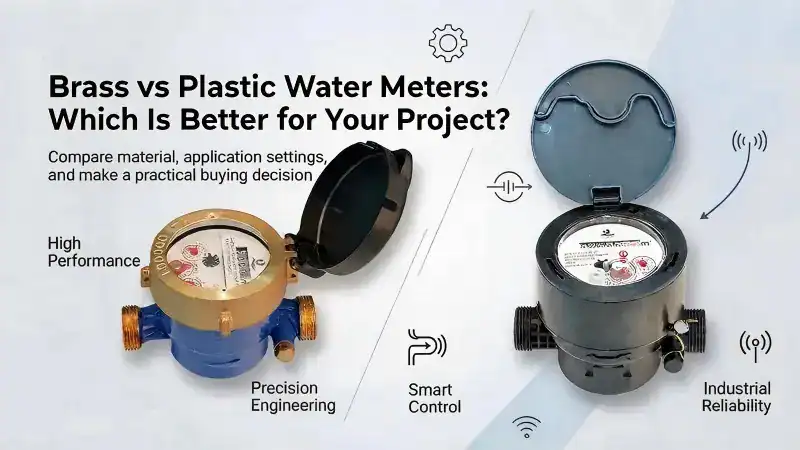
Choosing between brass and plastic body water meters is not just about price. You need the right meter body for your water system, budget, environment, and long-term performance. Here’s how to compare both options and make a practical B2B buying decision.
Brass vs Plastic Water Meters at a Glance
When you compare water meters, the body material affects more than appearance. It can influence cost, corrosion resistance, pressure tolerance, shipping weight, and how the meter performs in different application settings.
A brass body meter uses a metal housing, often made from copper-based alloy. A plastic water meter uses engineering plastics or composite material designed for water supply use. Both types of water meters can be accurate and reliable when matched to the right condition.
If you are still comparing meter types in general, DEAZESU also shares a helpful guide on different types of water meters. DEAZESU supplies mechanical, AMR, ultrasonic, and electromagnetic water meters for global projects.
| Feature | Brass water meters | Plastic water meter |
| Main material | Copper-based metal | Engineering plastics / composite |
| Cost | Usually higher | Usually lower |
| Corrosion resistance | Good, but depends on water condition | Often resistant to corrosion |
| Weight | Heavier | Lightweight and lighter |
| Pressure handling | Commonly strong in high-pressure lines | Depends on design and pressure ratings |
| Impact | Strong structure, but metal prices are high | Good impact resistance in many models |
| Aesthetics | Traditional, high-end look | Practical, modern, economic choice |
In simple terms, brass water meters are often chosen for tough duty and familiar specifications. Plastic water meters offer flexibility, lower material costs, and a clear cost advantage in many residential and large-scale projects.
Key Advantages and Limitations of Plastic Water Meters
Plastic water meters are a practical choice when you want to balance performance and cost. They are especially popular in large-volume projects where budget, corrosion resistance, and easy handling matter.
Pros of plastic water meters
- Lower cost than brass in many projects
- Lightweight, so shipping and installation are easier
- Strong corrosion resistance in wet or chemical-prone environments
- Good chemical stability across different water conditions
- Well suited for large-scale residential and submetering application
- Available in smart meter options for AMR and IoT upgrades
Cons of plastic water meters
- May not be the first choice for some buyers who prefer metal body meters
- Pressure performance depends more heavily on design and model specification
- In some high-end or exposed installations, plastic may feel less premium
- Project standards in some markets may still favor brass
Pros and Cons of Brass Water Meters
Brass water meters remain a trusted option in many commercial and municipal water projects. They are often chosen for their traditional metal construction and familiarity in the industry.
Pros of brass water meters
- Strong and durable metal body
- Good pressure resistance for demanding applications
- Widely accepted in municipal water and commercial systems
- Familiar material for many buyers and engineers
- Premium appearance for exposed installations
Cons of brass water meters
- Higher cost, especially when copper prices rise
- Heavier than plastic, which can increase shipping and handling effort
- Greater corrosion risk in certain water conditions
- Less cost-effective for large-scale budget-sensitive projects
Cost, Application, and Industry Selection Tips
If you are buying water meters for business use, you should compare total ownership value, not only unit price. That includes material, transport, operating environment, and expected lifespan.
Residential and submetering projects
For residential projects, a plastic water meter is often ideal. You usually need reliable consumption tracking, good accuracy, and a manageable budget. In these cases, plastic water meters offer an economic path for large-scale deployment.
This is especially true when you are installing many units at once. Lower body cost, lighter transport, and easier handling can create a real cost advantage.
Municipal water and utility networks
Municipal water buyers often focus on consistency, reliability, and local standards. Brass water meters are still common here, especially in legacy systems. But plastic is gaining ground where corrosion resistance and overall budget control matter more.
If you work with water utilities, compare the actual pressure ratings, exposure conditions, and maintenance goals before choosing a meter body.
Industrial or harsh environment use
In industrial settings, the decision becomes more technical. You need to evaluate temperature, pressure, impact, chemical exposure, and risk of damage. Some industrial lines may still favor brass, especially where a high-pressure metal body is preferred.
But not every industrial application needs brass. In certain environments, engineering plastics with good chemical stability may deliver better corrosion resistance and lower long-term risk.
How to Choose the Right Meter for Your Water System
If you want a fast selection method, start with your operating reality. The best meter is the one that matches your water system and your commercial priorities.
Ask yourself:
- What is your target cost per meter?
- Will the meter face corrosion risk or unstable ph levels?
- Is the project residential, municipal water, or industrial?
- Do you need a smart meter for remote reading?
- Are high-pressure lines or water hammer part of the working condition?
- Do you value lower shipping weight and faster install?
Here is a simple rule of thumb:
- Choose plastic water meters when budget, corrosion resistance, and large-scale rollout are top priorities.
- Choose brass water meters when traditional metal construction, strong pressure handling, and specification familiarity are more important.
If you are planning AMR deployment, it also helps to review how a wireless water meter reading system works. That can help you align body material with smart reading goals.
No matter which material you choose, accuracy depends on good design, proper installation, and fit-for-purpose use. A cheap meter that becomes inaccurate in the wrong condition is never a bargain. A more expensive meter that is over-specified may also waste budget.
The smart decision is to match material to application, not to follow a one-size-fits-all rule.
How DEAZESU can help
DEAZESU is a professional water meter manufacturer with over 20 years of experience. We supply both plastic and brass body water meters and support remote reading solutions with NB-IoT, LoRa, and 4G technologies .
Whether you are sourcing for residential, commercial, or municipal water projects, DEAZESU is ready to help. You can explore more products on our products page or contact us to discuss your project and request a quote .
FAQs about brass vs plastic body water meters
Are plastic water meters durable enough for long-term use?
Yes, many plastic water meters are designed for reliable long-term service. When made from quality engineering plastics, they can offer good impact resistance, good chemical stability, and longer service life in the right environment.
Do brass water meters last longer than plastic ones?
Not always. Brass water meters can be very durable, but lifespan depends on water quality, corrosion exposure, pressure, and maintenance. In some corrosive environments, plastic may actually help reduce long-term risk.
Which option is more cost-effective?
In many projects, plastic is more cost-effective because of lower material costs, lighter shipping, and easier large-scale deployment. Brass may still be worth the higher cost if your application demands a metal body or specific pressure performance.
Are brass water meters more accurate?
Accuracy is not determined by brass or plastic alone. A meter’s measuring mechanism, design quality, and installation condition matter more than the outer material.
Is a plastic water meter suitable for smart systems?
Yes. A plastic water meter can be used in smart and AMR systems when the product is designed for remote reading. DEAZESU offers smart water meter solutions with NB-IoT, LoRa, and 4G options for remote reading and leak monitoring .
Which material is better for corrosive water?
Plastic is often the better choice where corrosion is a concern. Because it is non-metal, it is generally resistant to corrosion and can perform well in environments with chemical exposure or challenging water condition.