If your team still checks meters by hand, you are losing time, accuracy, and visibility. An automatic meter reading (AMR) system helps utilities, property owners, and managers collect water meter data faster and with fewer errors.
With the right setup, AMR improves billing, reduces labor, and gives you a clearer view of water consumption across one property or an entire network.
What an AMR Water Meter Reading System Really Does
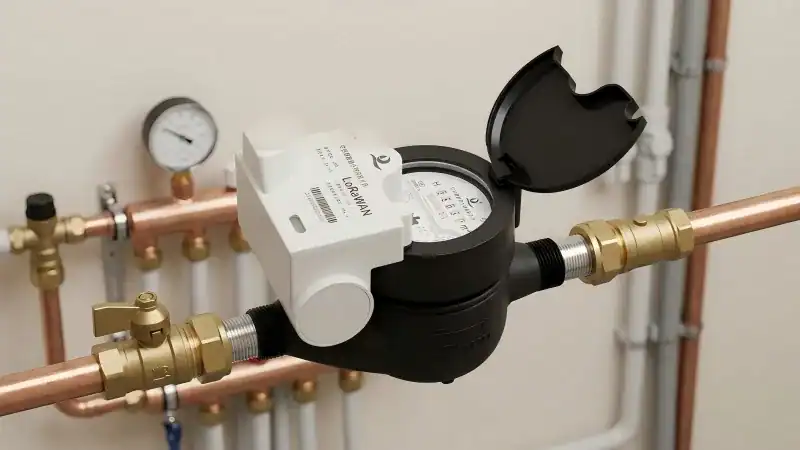
An AMR water meter reading system collects meter data without sending a person to read each meter manually. The system connects a water meter to a transmitter that sends usage data to a utility, building team, or management platform.
This makes billing faster and more accurate. It also helps reduce missed reads, manual entry mistakes, and delays in customer service.
How Wireless AMR and Remote Meter Readings Work
A typical AMR setup starts with a water meter or smart meter installed at the property. The meter records usage, and a transmitter sends the reading through a wireless network.
This allows utilities and property teams to collect data remotely. In many cases, readings can be gathered from the street, a vehicle, or a central software platform.
Basic Process
- The meter records water usage
- A transmitter captures the reading
- Data is sent wirelessly
- The platform receives and stores the reading
- Teams use the data for billing, monitoring, and reporting
Walk-By, Drive-By, and Fixed Remote Reading Options
Not all AMR systems work the same way. The right option depends on your budget, service area, and how often you need readings.
AMR Reading Methods
|
Type
|
How It Works
|
Best For
|
|---|---|---|
|
Walk-by
|
A technician collects readings with a handheld device
|
Small or medium properties
|
|
Drive-by
|
Readings are captured from a vehicle
|
Spread-out service areas
|
|
Fixed network
|
Meters send data automatically to a receiver or cloud platform
|
Larger systems needing frequent reads
|
Walk-by and drive-by systems are often more affordable to install. Fixed networks usually cost more upfront but provide better scalability and stronger reporting over time.
Why Water Utilities and Property Managers Automate Meter Readings
Manual meter reading takes time and creates room for mistakes. Staff must access each meter, record the number, and enter it into a billing system.
AMR simplifies that process. Readings arrive faster, access issues are reduced, and billing becomes more consistent.
Key Benefits
- Less manual work
- Fewer reading errors
- Faster billing cycles
- Lower labor costs
- Better visibility into water use
For landlords and property managers, AMR also improves tenant billing by using actual usage instead of estimates.
Smart Meter Benefits for Billing, Leak Detection, and Utility Data
A smart meter or AMR-enabled water meter does more than automate billing. It also improves how teams monitor water use and respond to unusual activity.
More frequent readings make it easier to spot leaks, continuous flow, or abnormal consumption patterns before they become bigger problems.
Some systems use pulse output from a standard water meter. This allows existing meters to be upgraded without replacing every unit at once.
Installation Tips: Choosing the Right Meter Systems for Water Utilities
The best AMR system depends on your site conditions, reading frequency, and software needs. Signal strength, meter location, and property layout all affect performance.
Before installation, review the meter type, communication method, and compatibility with your billing platform.
What to Review Before Installation
- Meter type
- Signal coverage
- Software integration
- Reading frequency
- Support and service model
- Scalability for future growth
A qualified vendor or technician should explain how the system works, what data you can expect, and how the setup can expand later.
FAQs
Is AMR the same as a smart meter?
Not always. AMR focuses on collecting meter readings remotely, while a smart meter may offer broader connectivity, richer usage data, and more advanced reporting. In everyday use, though, the terms often overlap.
How do walk-by and drive-by meter systems work?
In a walk-by setup, a worker passes near the meter with a receiver that captures the signal. In a drive-by setup, the same thing happens from a vehicle. Both methods are forms of automated meter reading and reduce the need to access each meter directly.
Why do water utilities use AMR systems?
Water utilities use AMR systems to improve billing, reduce human error, lower labor time, and collect more consistent meter readings. The system also helps support better water management and faster issue detection.
Is AMR a good fit for apartments and rental properties?
Yes. Property managers often use AMR to track each meter, simplify tenant billing, and improve visibility into utility usage. It’s especially useful when you want accurate reads without entering every unit.
What should you look for before installation?
Before installation, review meter type, signal coverage, software compatibility, reading frequency, and support. A qualified technician can help choose the right AMR system for your property or utility. In short, AMR improves billing accuracy, reduces manual work, and delivers better meter data.
Looking for a Reliable Water Meter Manufacturer?
DEAZESU is a leading manufacturer in China with 20 years of expertise in high-precision water metering solutions. We offer mechanical, ultrasonic, and IoT-enabled smart meters with NB-IoT, LoRa, and 4G technology. We provide certified products (CE, MID, ISO9001) and support custom OEM/ODM solutions for residential and industrial applications.Contact us today! We’re here to help you find the right water meter solution for your business.