Water meters track how much water flows through your pipes. The main types of water meters include mechanical meters like positive displacement and velocity meters, plus advanced options such as electromagnetic and ultrasonic meters.
Mechanical Water Meter Types: positive displacement and velocity flow
Mechanical water meters use moving parts to measure water flow. These traditional meters have been around for decades and remain popular in many homes and businesses today.
Positive Displacement Meters: best for low water flow
- Best For: Homes and small businesses (low-to-medium flow).
- Pros: Highly accurate, affordable, and simple design.
- Cons: Cannot handle rapid, high-volume water flows.
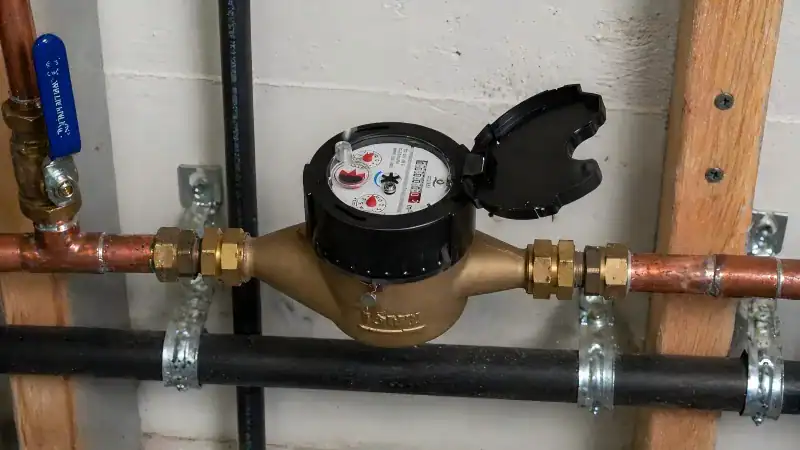
Positive displacement meters are cost-effective, highly accurate devices ideal for everyday residential use. They measure water by continuously filling and emptying internal chambers of a specific volume. As water flows through, it moves a disk or piston, which drives a magnet to update the mechanical usage register. While highly reliable for low-to-medium flows, they are not designed for large, rapid water volumes.
Velocity Flow Meters
- Best For: Wide range of applications from residential to industrial.
- Pros: Versatile, available in multiple subtypes for different flow needs.
- Cons: Accuracy varies by subtype; less reliable at inconsistent flow rates.
Velocity meters measure how fast water moves through them. They convert the speed of flow into volume to calculate your total water usage. These meters come in several subtypes that work for different situations.
Single Jet Water Meters
Single jet meters use one port to create a water jet that hits a turbine. The turbine spins and transmits its motion to a display that measures the volume passing through. These meters cost less than other options and work well for basic needs.
An internal strainer protects the mechanics from debris. You can use single jet meters for sub-metering in apartments or monitoring water in small commercial spaces. They give reliable readings for their simple design.
Multi-Jet Water Meters
Multi-jet meters have several ports arranged around an internal chamber. Each port creates a jet that strikes an impeller from different angles. This balanced design keeps the meter accurate even at lower flow rates.
These meters work well for larger water users and industrial settings. They record data in real-time so you can spot changes in water consumption right away. The even distribution of force across the rotor blade helps them last longer than single jet models.
Turbine Flow Meters
Turbine meters use angled blades on an internal rotor. Water flowing around the blades makes them spin clockwise or counterclockwise. These meters work best in large pipes with high volume but lower flow rates.
A magnet attached to the blades measures their speed. This magnet connects with metal embedded in the meter to judge water speed accurately. The sensors work no matter which direction water flows through the turbine.
Compound Water Meters
Compound meters combine two technologies to handle situations where water demand changes rapidly. They use both turbine and positive displacement methods to capture accurate measurements.
These meters take two sets of readings. One larger meter tracks high flow while a smaller meter measures low flow. You add both readings together to get total usage. This setup works well for buildings with varying water needs throughout the day.
Advanced Electronic and Smart Water Meters
Electronic water meters use modern technology to measure flow without relying on mechanical parts. These meters give you more accurate data and additional features compared to traditional options.
Electromagnetic Water Meters
- Best For: Commercial, industrial, and large-volume water users.
- Pros: Highly accurate, exceptionally durable, low maintenance, and handles wide flow ranges.
- Cons: Requires specific pipe placement and electrical connections for proper installation.
Electromagnetic (mag) meters measure water volume by detecting the voltage created as water flows through a magnetic field. With no internal moving parts, they are incredibly durable, require minimal maintenance, and provide highly precise readings for commercial and industrial billing.
Ultrasonic Water Meters
- Best For: Properties requiring precise, long-term water measurement with minimal maintenance.
- Pros: Highly accurate, long lifespan, real-time data, reduces billing disputes.
- Cons: Higher upfront cost than basic mechanical meters.
Ultrasonic meters use sound waves to measure how fast water moves through pipes. This technology represents a significant advancement in water metering. Property owners get accurate information in real-time about their water usage.
These meters have no moving parts, giving them a long life expectancy. You avoid the wear and tear that affects mechanical meters. The accurate data helps prevent billing disputes between customers and water utilities.
Smart Water Meters
- Best For: Homes, businesses, and industrial sites needing automated monitoring.
- Pros: Real-time data, remote reading, leak detection, reduced labor.
- Cons: Higher upfront cost than mechanical meters.
Smart meters combine electronic flow measurement with digital reporting, automatically sending usage data to utilities, building managers, or phone apps. Real-time monitoring makes it easy to track consumption patterns, calculate water bills, and quickly detect leaks. They are long-term investment for both residential and large-scale industrial users.
Frequently Asked Questions
How do I choose the right residential water meter for my home?
Positive displacement and single-jet meters are commonly used in homes due to their accuracy at low flow rates and affordability. Ultrasonic meters are also suitable for modern homes seeking advanced features, though they cost more.
How do I choose the right type of water meter?
Consider your flow rate needs, water quality, installation location, required accuracy, and budget. For low to medium flows and clean water, mechanical meters work well. For higher accuracy, remote monitoring, or challenging water conditions, electronic meters may be better.
How long do water meters last?
Mechanical meters typically last 10–15 years, depending on water quality and usage. Electromagnetic and ultrasonic meters often last 15–25 years or more due to the lack of moving parts.
Do electronic water meters require maintenance?
Electronic meters have minimal maintenance needs since they lack moving parts. Occasional calibration and inspection may be required, but overall upkeep is low compared to mechanical meters.
Can water meters detect leaks?
Yes, many modern meters can help detect leaks by monitoring continuous low flow or sudden spikes in usage. Some electronic models offer real-time alerts for unusual patterns.
Is installation difficult?
Mechanical meters usually require pipe cutting and professional installation. Some ultrasonic meters offer clamp-on designs that make retrofitting easier without cutting pipes. Always follow manufacturer guidelines for best results.
Looking for a Reliable Water Meter Manufacturer?
DEAZESU is a leading manufacturer in China with 20 years of expertise in high-precision water metering solutions. We offer mechanical, ultrasonic, and IoT-enabled smart meters with NB-IoT, LoRa, and 4G technology. We provide certified products (CE, MID, ISO9001) and support custom OEM/ODM solutions for residential and industrial applications.
Contact us today! We’re here to help you find the right water meter solution for your business.