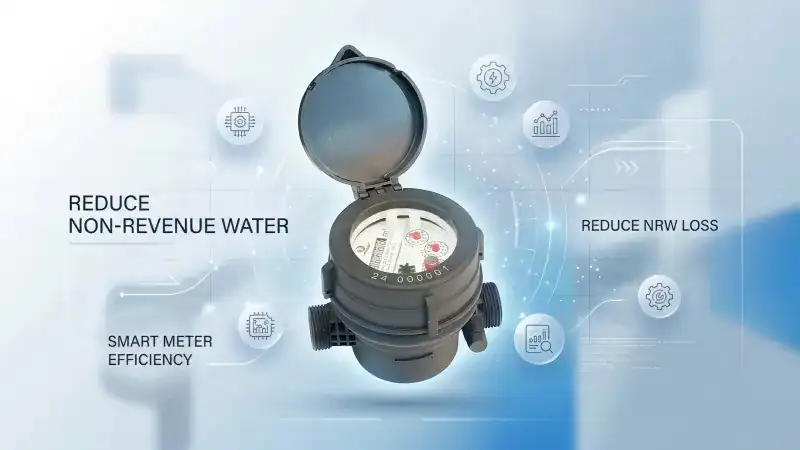
Are you losing perfectly good water before it even reaches your customers? Non-revenue water (NRW) is a massive drain on your budget and precious resources. Let’s explore how upgrading your tracking systems can help you identify leaks, stop theft, and save water effectively.
What Causes Non-Revenue Water Loss?
Every utility faces the challenge of lost water. But where is it going? Generally, this water loss happens in your distribution network before reaching the end user. Understanding these root causes is the first step in managing non-revenue water.
Here are the three main culprits behind high NRW:
- Real losses: Physical water leaks in aging water infrastructure or pipe bursts.
- Apparent losses: Meter inaccuracies, data handling errors, and water theft.
- Unbilled consumption: Water legitimately used for firefighting or flushing mains, but not billed.
Why NRW Reduction Matters for Water Utilities
High NRW levels mean you are pumping water and treating it, only to lose revenue. Reducing this waste is crucial for the sustainable water management of any modern utility.
Here is a quick breakdown of why tackling water loss and NRW is so important:
|
Benefit Area
|
Impact of NRW Reduction
|
|
Financial Savings
|
Increases billed revenue water and dramatically lowers operational costs.
|
|
Environmental
|
Promotes water conservation and helps combat global water scarcity.
|
|
Public Health
|
Ensures consistent access to safe and clean drinking water for communities.
|
Proven Ways to Reduce Water Loss in Your Distribution Network
Tackling lost water requires a proactive, modern approach. Relying on outdated practices or simply reacting to visible main breaks will only lead to more lost revenue.
You need comprehensive nrw reduction strategies. Here are the most effective ways to reduce your losses, improve the efficiency of water distribution, and protect your water resources.
Implement Active Leak Detection Systems
You simply cannot fix what you cannot find. Relying on customers to report puddles is not enough. Implementing continuous leak detection across your water distribution system is essential.
Modern acoustic sensors and flow monitors can identify hidden underground leaks before they become catastrophic main breaks. Finding these issues early helps you prevent water from escaping unnoticed.
Optimize Pressure Management Zones
Another excellent strategy is active pressure management. When water pressure fluctuates wildly or is kept unnecessarily high, it puts immense daily stress on pipes, joints, and valves.
By optimizing and stabilizing pressure zones within your water supply network, you directly minimize physical leaks. This practice also extends the overall life of your aging infrastructure.
Upgrade to Advanced Smart Water Meters
Traditional mechanical meters degrade over time. As they age, they slow down, leading to meter inaccuracies and inaccurate billing. Upgrading to smart water meters is a fundamental game-changer.
These advanced devices place highly accurate measuring tools across your entire water network. They measure water precisely, ensuring you bill for exactly what is used and dramatically reducing apparent losses.
DEAZESU Smart Meters: Your Partner in Managing Non-Revenue Water
To truly improve water management, you need reliable hardware and accurate data. That is where DEAZESU comes in. We provide cutting-edge solutions designed to help water utilities regain control of their networks.
By integrating DEAZESU smart water meters, you gain real-time visibility into your water usage and system health. You move from guessing to knowing exactly where your water is going.
Here is how our advanced meters directly support your non-revenue water reduction goals:
- Pinpoint Accuracy: Our meters utilize advanced ultrasonic technology. This eliminates the mechanical wear and tear that causes inaccuracies, ensuring every drop is accounted for.
- Instant Alerts: Built-in intelligent alarms notify your team immediately about potential leaks, reverse flow, or tampering. This helps you catch the theft of water instantly.
- Seamless Integration: Our meters easily connect with modern water management systems. They allow for automated remote reading, eliminating data entry errors.
- Durable Design: Built with high-quality materials to withstand harsh environments, our meters ensure long-term reliability. This means less water lost over time due to equipment failure.
Investing in high-quality, modern infrastructure is the most reliable path to the reduction of nrw. To learn how our metering solutions can fit your specific network needs, contact us today for a personalized consultation.
FAQs about Managing Non-Revenue Water
What is an acceptable NRW level?
According to the International Water Association, an acceptable nrw level varies greatly by region, topography, and the age of the infrastructure. However, most leading utilities aim to keep their non-revenue water levels well below 15% to maintain operational profitability.
How do smart systems help reduce waste?
Advanced systems track the exact water produced at the treatment plant versus what is actually billed to end customers. This continuous water balance calculation highlights discrepancies quickly, allowing your team to act fast and reduce waste.
Can smart meters detect water theft?
Yes! Smart meters easily spot unusual water usage spikes, continuous unauthorized flows, or instances of physical meter tampering. They act as an early warning system, alerting utility operators to unauthorized connections immediately.
Why is replacing old pipes important?
Aging pipes are the primary source of real physical leaks. While meters track the data, prioritizing the repair and replacement of degraded pipes reduces the physical volume of water lost to the ground. This ensures a reliable water supply.
Does reducing water pressure affect customer water service?
When done correctly, no. Effective pressure management ensures pressure is high enough for a positive customer water service experience, but low enough to prevent excess stress on the pipes. It is about careful balance and stabilization.