If you’re planning a water meter installation, the key is to keep the process simple, safe, and precise. This installation guide walks you through what to check, how to install the unit correctly, and when to call a service pro.
Water Meter Installation Basics for Your Property
Installing a water meter correctly helps ensure accurate billing, steady water flow, and fewer plumbing issues. Whether you are replacing an old unit or adding a new one, it is important to choose the right meter, follow local code requirements, and check the system carefully for leaks after installation.
What You Need to Install the Right Meter
Pick the Correct Meter Type
Not every meter fits every line. You need the correct type of meter for your water supply, pipe size, and expected flow rate. A mechanical meter is still common in residential settings, while some utilities now use smart models for remote read and easier service.
If you’re replacing an old unit, compare the new meter with the existing one before installation.
Check these details:
- Meter size
- Flow direction arrow
- Utility or manufacturer instructions
- Mechanical vs. smart meter type
Gather Tools and Check Local Codes
Gather all tools and fittings before starting. Keep the work area clean and dry to prevent dirt from entering the line.
Common items needed:
- Water meter
- Fittings and couplings
- Thread seal material
- Wrench
- Replacement valve parts, if needed
This is also the time to check local codes. Some areas require a backflow device, specific valve spacing, or a set distance between the meter and the nearest bend in the line. If the meter is located outside or near a crawlspace opening, your setup may need extra protection from weather or accidental damage.
Planning a DN15 replacement? Review the DN15 multi-jet water meter page for the composite body, dry-type register, connection size, and available product specifications before sending your project requirements.
Step-by-Step Water Meter Installation
Shut Off the Water Supply and Prep the Line
Turn off the main water valve first. Open a faucet to release pressure and drain the line.
Inspect the old meter area for corrosion, worn fittings, or past leaks. If pipes or valves are damaged, replace them during the same job.
Before installing the new meter:
- Remove the old meter carefully
- Clean the pipe ends
- Remove debris from the opening
- Check that the line is ready for the new unit
Fit the Meter, Valve, and Pipe Correctly
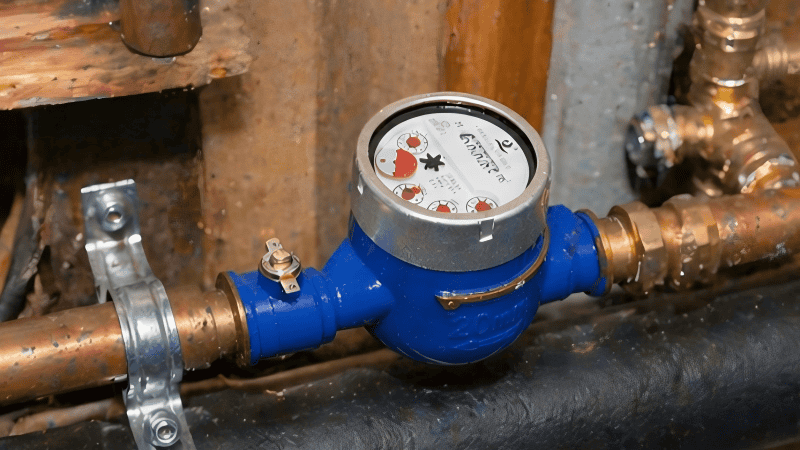
Install the meter in the correct flow direction. Most meters have an arrow showing how water should move through the unit.
Make sure the meter sits straight and the pipe is aligned properly. Avoid twisting, bending, or forcing the connections.
Good installation practices:
- Follow the flow arrow
- Keep the meter level and straight
- Tighten fittings securely, but do not overtighten
- Make valves easy to reach for future service
Test Flow and Check for Leak
Once the meter is in place, slowly open the main valve and let water move back through the line. Open a nearby faucet to release trapped air and restore smooth flow. Watch the meter as water enters the system, and check every joint for a leak.
This is the most important check in the whole process. Even a small leak around the meter, valve, or pipe can waste water, stain walls, and cause hidden damage over time. If you spot a leak, turn the valve off, dry the area, and adjust the fitting before testing the meter again.
Common Meter Installation Mistakes to Avoid
Most problems happen because the installation is rushed. A wrong meter size, dirty pipe ends, or poor alignment can affect readings and damage the system.
Even a small leak can lead to long-term water damage and false usage readings.
|
Mistake
|
Why It Causes Problems
|
|---|---|
|
Wrong meter size
|
Can affect flow and reading accuracy
|
|
Installing backward
|
Meter may not read properly
|
|
Dirty pipe ends
|
Debris can damage the meter or restrict flow
|
|
Skipping leak check
|
Small leaks can become costly damage
|
|
Pipe stress on meter body
|
Can crack housing or weaken joints
|
After Installation: Read the Meter and Protect the System
After installation, inspect the area again. The meter, valves, and visible pipes should remain dry after a few minutes of use.
Learn how to read the meter so you can monitor water use and spot problems early. If the meter moves when no water is being used, there may be a hidden leak.
After-Installation Checklist
- Check all visible joints for moisture
- Confirm the meter is reading correctly
- Make sure valves remain accessible
- Keep the area clear for future service
- Call a plumber or utility team if anything seems off
FAQ
Can you install a water meter yourself?
Sometimes, yes, but it depends on your local utility and local codes. Some areas allow you to handle parts of the installation, while others require utility or licensed plumber service for the meter itself.
Where should a meter be installed?
A meter is usually installed on the main water supply line where water enters your property. It should be placed where the meter can be reached easily for service, inspection, and accurate read access.
How do you know if the meter installation has a leak?
After you install the unit, turn the water back on slowly and check every pipe, valve, and fitting. If you see drips, moisture, or unexplained movement on the meter, you likely have a leak.
When should you replace a water meter?
You may need to replace a meter if it stops recording correctly, shows wear, or has visible damage. A failing meter, repeated leak issues, or poor flow can also signal that it’s time for a new water meter.
What should you do if the meter reading seems wrong?
First, check for a running faucet, toilet problem, or hidden leak. If everything seems normal, contact your utility or plumber to test the meter. A good installation depends on the right meter, clean pipe work, careful setup, and leak checks. If installed properly, the meter should work reliably for years.
Looking for a Reliable Water Meter Manufacturer?
DEAZESU is a leading manufacturer with 20 years of expertise in high-precision water metering solutions, offering mechanical, ultrasonic, and IoT-enabled smart meters with NB-IoT, LoRa, and 4G technology. We provide certified products (CE, MID, ISO9001) and support custom OEM/ODM solutions for residential and industrial applications.
Contact us today! We’re here to help you find the right water meter solution for your business.