In recent years, NB-IoT water meters have been on the rise. This technology isn’t just a new kind of meter; it’s a foundational shift in how we measure, manage, and conserve our most vital resource.
This article explains what an NB-IoT water meter is, delves into the technology that powers it, and explores how it works to create smarter water networks.
What is an NB-IoT Water Meter?
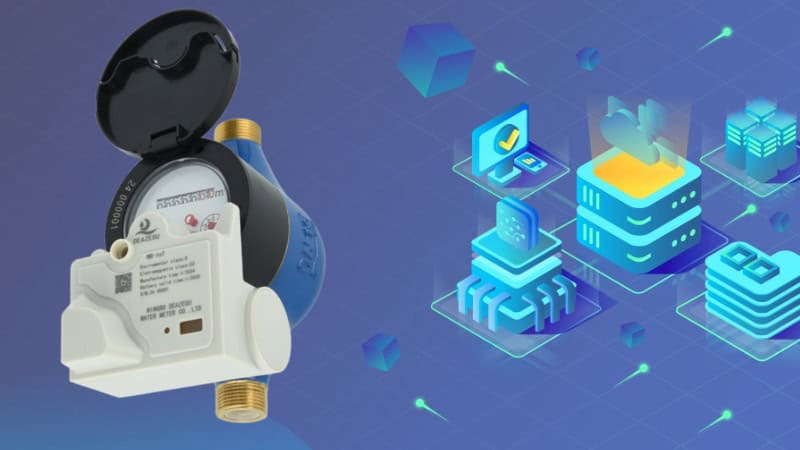
At its core, an NB-IoT water meter is a highly advanced water metering device that uses Narrowband Internet of Things (NB-IoT) technology to transmit consumption data wirelessly over a cellular network. It is the marriage of two key technologies:
- An Advanced Metering Module:This is typically a static water meter with no moving parts, most often using ultrasonic or electromagnetic measurement principles for high accuracy across all flow rates.
- An NB-IoT Communication Chipset:This embedded cellular radio is designed specifically for low-power, wide-area (LPWA) communication.
The result is a “smart” meter that can autonomously send precise, tamper-resistant water usage data directly to the utility’s or building manager’s central system without any manual intervention, drive-by readings, or reliance on household Wi-Fi.
Demystifying NB-IoT: The Communication Backbone
To understand the meter, you must first understand NB-IoT. It is a wireless communication standard built for the IoT. Unlike standard 4G/5G designed for streaming video, or short-range protocols like Bluetooth, NB-IoT is optimized for devices that need to send small packets of data, infrequently, over long distances, and with exceptional battery life.
Its key characteristics are:
- Low Power Consumption:NB-IoT devices can operate on a single battery for 8-12 years, making them ideal for embedded meters.
- Deep Penetration & Wide Coverage:Its radio signals travel farther and penetrate deeper into buildings and underground infrastructure than traditional cellular signals.
- High Connection Density:A single cellular tower can support hundreds of thousands of NB-IoT devices, perfect for city-wide deployments of meters and sensors.
- Licensed Spectrum:It operates on secure, licensed cellular bands, guaranteeing reliability, security, and freedom from interference—a critical factor for utility billing data.
How Does an NB-IoT Water Meter Work? A Step-by-Step Breakdown
The operation of an NB-IoT meter is a continuous, automated cycle of measurement, processing, and communication.
Step 1: Measuring Consumption
Inside the meter, there are no gears or turbines to wear out. Instead, an ultrasonic sensor sends high-frequency sound waves across the flow of water. The meter’s processor calculates the flow velocity by measuring the time difference of the waves traveling with and against the flow. This velocity, combined with the known pipe diameter, is used to calculate the volumetric water consumption with extreme accuracy, even at a barely-trickling drip.
Step 2: Data Processing & Storage
The meter’s internal microcontroller doesn’t just log a total. It can process data to:
- Record consumption at pre-set intervals (e.g., hourly, daily).
- Detect abnormal flow patterns indicative of continuous flow (a running toilet)or minimum night flow (a hidden leak).
- Monitor for tamper events, such as meter reversal or magnet attacks.
- Store this data in its memory until the scheduled transmission time.
Step 3: The NB-IoT Transmission
At a pre-programmed time—often once per day in the early morning—the meter “wakes up.” Its NB-IoT module establishes a secure, encrypted connection directly with the nearest cellular network tower. It then transmits its data packet, which includes:
- Meter Unique ID
- Total water consumption
- Timestamp
- Any alarm flags (leak, tamper, battery low, reverse flow)
This transmission takes only seconds. The data travels over the mobile carrier’s dedicated NB-IoT network to the cloud.
Step 4: Data Reception & Utility Action
The utility or service provider hosts a dedicated Meter Data Management (MDM) platform in the cloud. This platform receives, decrypts, and validates the data from thousands of meters simultaneously. Here, the raw data is transformed into actionable intelligence:
- Billing:Accurate, automated readings enable precise consumption billing without estimates.
- Leak Alerts:The system can instantly flag an alarm from a meter detecting a continuous leak and automatically generate a work order or even send a text alert to the homeowner.
- Network Analytics:Utilities can analyze aggregate data to understand district-wide consumption patterns, identify areas of high loss, and manage pressure more effectively.
The Transformative Advantages
The shift to NB-IoT water meters delivers profound benefits:
- End-to-End Automation:Eliminates the cost, error, and inconvenience of manual meter reading.
- Unprecedented Leak Detection:Transforms the meter from a billing tool into a conservation and loss-prevention asset, protecting property and saving billions of gallons of water.
- Revenue Protection:High accuracy at low flows and tamper resistance ensure all consumed water is accounted for, reducing “non-revenue water.”
- Enhanced Customer Service:Customers can access near-real-time usage data via a portal or app, empowering them to understand their consumption and manage costs.
- Operational Efficiency:Enables dynamic network management, remote diagnostics, and faster response to issues like main breaks.
Challenges and Considerations
The technology is not without its hurdles. The initial capital investment is significant. Utilities must manage the IT transition to cloud-based MDM platforms and ensure robust cybersecurity for the data stream. Furthermore, network coverage must be confirmed in all deployment areas, though mobile operators are rapidly expanding their NB-IoT footprints globally.
Conclusion
An NB-IoT water meter is a sensor node in a vast, intelligent network. It represents the critical first step in digitizing water infrastructure. By providing granular, frequent, and reliable data directly from the point of consumption, it lays the foundation for a more resilient, efficient, and sustainable water future.