Ever wondered how your system tracks every drop? Understanding your device is crucial for maintaining accurate measurement and controlling costs. Let’s break it down.
Understanding the Mechanical Water Meter
The traditional mechanical meter remains a cost-effective choice globally. As water passes through the device, physical movement drives the entire measurement process. Let’s look at the main parts that make this tracking possible.
The Measuring Chamber
This is where the core action takes place. Water flow enters here, turning a turbine or piston. This component is highly engineered to ensure accuracy. If installed correctly, it provides consistent data for years without interruption.
The Register and Gear System
The motion from the chamber transfers to a gear mechanism. This gear train converts physical rotations into readable numbers. The register will then securely record your total water usage over time, ensuring proper billing and monitoring.
Decoding the Water Meter Parts Diagram
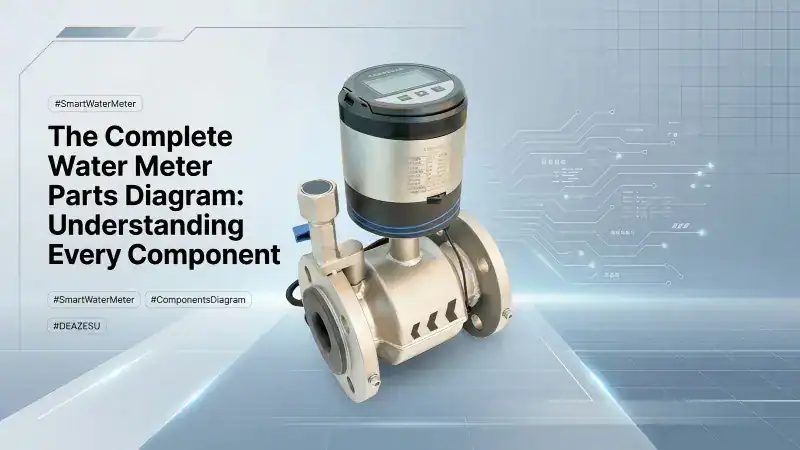
A visual breakdown helps demystify the device. When you look at a standard water meter parts diagram, you’ll see how seamlessly each part fits into the broader system to measure volume accurately.
Here is a quick breakdown of the core sections:
| Component | Primary Function |
| Body/Housing | Protects internal parts and provides structural resistance. |
| Measuring Element | Interacts directly with the water flow to calculate volume. |
| Register | Displays the final measurement data for the user. |
Smart and Ultrasonic Innovations
Today’s industry standards demand more than just basic tracking. Many new models upgrade the traditional setup with smart communication modules. These additions allow for remote reading, real-time data collection, and faster leak detection.
Advanced options use sound waves instead of moving parts. Some meters even use magnetic fields to ensure precise measurement without physical wear, greatly increasing longevity and performance. You can explore these modern AMR meters in our comprehensive catalog.
Material Choices for Durability and Resistance
The materials used to build a meter directly impact its lifespan. Manufacturers carefully select materials to withstand harsh environmental conditions, constant water pressure, and temperature changes.
Common materials include:
- Brass and Bronze: Offer excellent resistance to high pressure and corrosion.
- Composite and plastic: Provide a lightweight, reliable, and highly affordable alternative.
- Stainless Steel: Used for critical internal components requiring maximum durability.
FAQs about Water Meter Parts
How does a meter measure water usage?
It uses either a mechanical measuring element, like a turbine turned by the water flow, or advanced solid-state technology like ultrasonic sensors to calculate the exact volume passing through the pipe.
Can I replace just one broken component?
Yes, many modern devices feature modular designs. For instance, if the register fails but the body is intact, you can often just swap that specific part. Check out our water meter blog for more helpful maintenance tips and guides.
Looking for a Reliable Water Meter Manufacturer?
DEAZESU is a leading manufacturer with 20 years of expertise in high-precision water metering solutions, offering mechanical, ultrasonic, and IoT-enabled smart meters with NB-IoT, LoRa, and 4G technology. We provide certified products (CE, MID, ISO9001) and support custom OEM/ODM solutions for residential and industrial applications.
Contact us today! We’re here to help you find the right water meter solution for your business.