When a pipe bursts or a plumbing emergency strikes, most homeowners instinctively search for how to “turn off the water meter.”
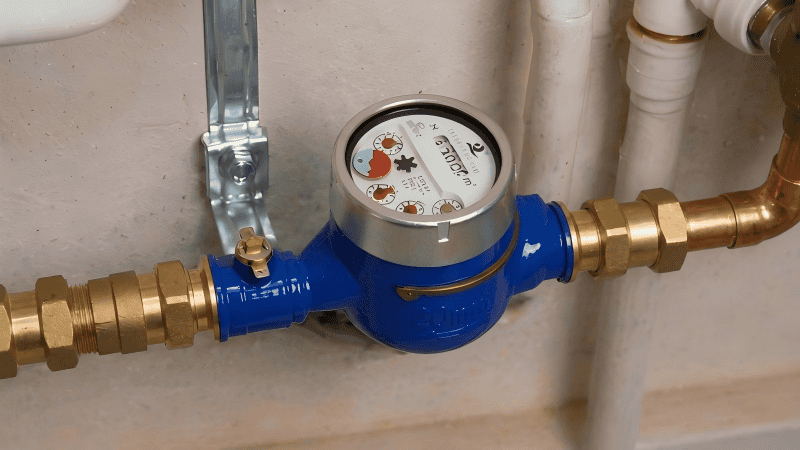
The truth is, you cannot turn off a water meter. It is simply a measuring device that tracks your water usage. It has no lever, no switch, and no ability to stop water flow.What you actually need to find is your main shut-off valve — a separate component installed near the meter that physically controls water entering your home.
This guide will clear it all up, showing you exactly where to find the right valve and how to shut off your water supply quickly and confidently.
Where to Locate the Water Meter and Main Water Valve
The main water shutoff valve is usually installed where the main water line enters the home. In many houses, that location is indoors. In warmer climates, it may be outside near the water meter.
Start by checking the most common areas first. If you cannot find the valve inside, move to the meter box outside.
Common Places to Look
|
Location
|
Where to Check
|
|---|---|
|
Basement
|
Near the front wall or where the main line enters
|
|
Utility room
|
Around exposed pipes or near the water heater
|
|
Garage
|
Along interior walls or near plumbing access points
|
|
Crawlspace
|
Near the main supply line entry
|
|
Outside meter box
|
Near the curb, sidewalk, or property line
|
Check the basement, utility area, or interior wall first
Follow the main pipe from the street-facing side of the property. The shutoff valve is often close to where the water supply enters the building.
Look near:
- The water heater
- A mechanical room
- Exposed pipe runs
- Interior access panels
Look at the water meter box or street side
If you cannot find the valve indoors, check the water meter box outside. Some homes have a customer-side shutoff valve near the meter.
If you are unsure where to look, your local utility may be able to explain the usual valve location for homes in your area.
How to Shut Off the Water and Turn the Valve Safely
In a plumbing emergency, speed matters. Find the correct valve first, then turn it slowly to avoid damaging the pipe or valve stem.
Most shutoff valves use either a round handle or a lever handle. Each type closes differently.
How to Turn Common Valve Types
|
Valve Type
|
How to Shut It Off
|
|---|---|
|
Lever-style valve
|
Turn a quarter turn until the handle is perpendicular to the pipe
|
|
Round-handle valve
|
Turn clockwise several times until it stops
|
Safe Shutoff Tips
- Turn the valve slowly
- Do not force a stuck valve
- Use a wrench only if necessary and carefully
- Stop if the valve feels like it may break
After shutting off the water, test a faucet in the kitchen or bathroom. If no water flows, the supply is off.
Common Valve Type, Repair Issues, and When to Call Service
Not every valve works the same way. Older homes often have gate valves, while newer systems usually use ball valves.
Ball valves are typically easier to operate and more reliable. Gate valves are more likely to stick, drip, or fail to shut off water completely.
Common Valve Problems
- Valve handle is hard to turn
- Water keeps flowing after shutoff
- Handle spins loosely
- Moisture appears around the valve
- Rust or mineral buildup is visible
When to Call a Plumber
Call a plumber if:
- The valve will not move
- The handle feels stripped or loose
- The pipe is corroded
- Water leaks around the valve
- The shutoff does not fully stop the flow
Install and Maintain a Reliable Shutoff Valve
If your current shutoff valve is old or difficult to use, replacing it may be a smart upgrade. A modern valve is easier to operate and gives you better control during an emergency.
Many plumbers recommend installing a ball valve for better long-term performance and easier shutoff.
Simple Maintenance Tips
To keep the valve working properly:
- Test it once or twice a year
- Turn it gently, then return it to the open position
- Check for rust, moisture, or stiffness
- Watch for mineral buildup in hard water areas
Regular testing helps prevent sticking and makes the valve easier to use when you need it most.
FAQs
How do you find the main water valve fast?
Look where the main water line enters your home. That spot is often in the basement, garage, utility room, or near the water meter. If you still cannot find the main water shutoff, check outside near the meter box.
Should you use a wrench on a stuck valve?
Yes, but gently. A wrench can help you turn a stubborn valve, but too much force can damage the handle or connected pipe. If it will not move, call for professional service.
What if the valve shuts, but water still runs?
That often means the valve is worn out or not fully closing. It may also point to a hidden leak or faulty fixture. In that case, you may need a repair or a new valve.
Is the water meter valve the same as the home shutoff valve?
Not always. The water meter may have its own valve, while your house may also have an indoor main water shutoff. It depends on your property, local utility, and how the system was originally installed.
Looking for a Reliable Water Meter Manufacturer?
DEAZESU is a leading manufacturer with 20 years of expertise in high-precision water metering solutions, offering mechanical, ultrasonic, and IoT-enabled smart meters with NB-IoT, LoRa, and 4G technology. We provide certified products (CE, MID, ISO9001) and support custom OEM/ODM solutions for residential and industrial applications.
Contact us today! We’re here to help you find the right water meter solution for your business.